About the UBA

The University Buddhist Association of UCLA is an organization of students, faculty, and community members who come together to learn about and practice Buddhism. We're a non-sectarian Buddhist group that welcomes all Buddhists and non-Buddhist of all faiths and traditions.

If you're interested in learning more about the UCLA Buddhist community, please come to our meetings.

When: Every Tuesday, 5:30 - 7:00pm
Where: University Catholic Center
633 Gayley Avenue
Los Angeles, CA 90024

If you have any questions, please contact us at uba.ucla.online@gmail.com.
Custom Search
Showing posts with label Tibet. Show all posts

Sunday, March 29, 2009

South Africa bans Dalai Lama from Peace Conference

I guess you just can't please everyone, though I do like how the prime minister of the Tibetan-government-in-exile interpreted the situation:

"Samdhong Rinpoche, the prime minister of the Tibetan government-in-exile, said South Africa was under pressure from Beijing and its decision to bar the Dalai Lama was a business matter.

'South Africa is a newly emerging country and China is giving it considerable economic resources so it is understandable,' he said Monday in Dharmsala, India. 'Every country has to protect its economic and political interests.' "

Read full article.

Monday, March 23, 2009

The West’s largest Buddhist stupa rises in Spain

So what is it doing there in Spain??

"This isn’t to say that the Benalmádena stupa is devoid of political overtones. “The target may be other Buddhist groups,” suggests Martin Baumann, a professor of religion at Lucerne University (Switzerland) who researches the political impact of religious buildings. Many Tibetan Buddhists believe that their tradition is the purest. “In this way,” Dr. Baumann adds, “the Dalai Lama and other lamas are seen as being the carriers of unpolluted spirituality.” Built in strict accordance with traditional prescriptions and rituals, the stupa thus gives Tibetan Buddhism high visibility in the West’s Buddhist landscape.

The stupa also plays into an internal dispute within one of the four principal schools of Tibetan Buddhism, the Karma Kagyu. The Dalai Lama is the most prominent international spokesman for Tibetan Buddhism and for the Tibetan diaspora. This shines the spotlight on the school he heads, the Gelugpa school. Some speculate, however, that upon his death, focus could shift to the Karma Kagyu school and its head, known by the title of “Karmapa,” as the rallying point for Tibetans in exile."

Read Full Article.

Tuesday, March 10, 2009

Legal Education in Tibet


"Tibet has reported success in a year-long legal education at its monasteries, where monks have been told to abide by laws and regulations in religious practice, rallies and parades, officials in charge of religious affairs said Monday.

More than 2,300 officials were sent to Tibet's 505 monasteries after the deadly riots of March 14 last year to promote the legal awareness of monks and nuns and dissuade them from being duped by separatist forces and ensure the normal practice of Buddhism, said Soinam Renzin, deputy chief of the United Front Work Department of the Communist Party of China (CPC) Tibet Regional Committee."

Read full article.

Photo from ChinaView

Sunday, February 22, 2009

Han Tibetan Buddhists

Growing number of ethnic Han Chinese are following Tibetan Buddhism despite the Communist Party.

"While statistics are hard to come by, monks, followers and experts say that growing numbers of middle-class Chinese are turning to Tibetan Buddhism, driven by the perception of a spiritual vacuum in society and aided by the voluminous information available on the Internet. Communist Party officials and celebrities alike have embraced Tibetan Buddhism, despite having to worship at home, meet their lamas at night and run the risk of attending officially unauthorized events, such as the fish release and "fire sacrifice" at Huangsongyu Reservoir."

"Like other religions, Buddhism suffered during the persecution of the 1966-1976 Cultural Revolution. When it limped back, it took a simpler form that had been influenced by China's gradual opening to the West. Meanwhile, a purer and more complex form of Buddhism continued to be practiced in the isolated region of Tibet, which the Chinese army had invaded in 1950 and annexed in 1951. The Communists allowed a degree of autonomy until a Tibetan uprising in 1959. After the Dalai Lama fled to India that year, China formed the Tibet Autonomous Region, which it has governed since. Some Chinese Buddhist temples now invite senior Tibetan monks to visit in a bid to attract more followers."

Read full article.

Monday, February 16, 2009

Similarities between Darwinism and Buddhism


From National Geographic News:

Charles Darwin probably didn't know it, but he held views on human empathy that mirror Buddhist beliefs, says a pioneer in decoding facial expressions.
Based on his interactions with foreign cultures, Darwin came to define empathy as a desire to end someone's suffering to assuage one's own discomfort. Buddhist teachings also see empathy as a somewhat selfish motivation, but one that the Dalai Lama, the spiritual leader of Tibet, calls the "seed of compassion."

Read full article.

Photo from National Geographic News.

Saturday, February 14, 2009

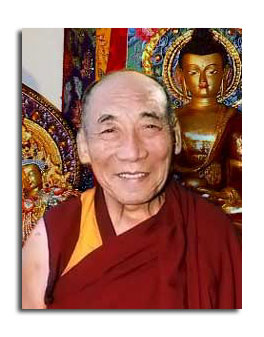
The Passing of Ven. Geshe Tsultim Gyeltsen


Venerable Geshe Tsultim Gyeltsen
Founder and Spritual Director of Thubten Dhargye Ling


"Dear Friends,

We have very sad news. Our great and dear teacher Ven. Geshe Gyeltsen passed from our world today, Friday February 13th at around 12:20 p.m. Ven. Geshela died peacefully, surrounded by monks from Gaden Shartse Monastery and family members.

All prayers and necessary rituals were performed by the monks. His Holiness the Dalai Lama and other lamas called and spoke to Ven. Geshela earlier this week.

Please pray for Geshela's swift return to continue his teachings for the benefit of all sentient beings.

Students are encouraged to include the King of Prayers into their daily practice, wishing Geshela to return quickly to continue to teach us.

Thubten Dhargye Ling / Center for the Study of Buddhism and Tibetan Culture"

Learn more about Venerable Geshe Tsultim Gyeltsten.

Photo from UrbanDharma

Tuesday, February 10, 2009

Reuters - Sensitive Anniversaries in China in 2009

From Tibet to the Falun Gong, we can expect the government to approach these anniversaries very carefully...

Read full article.

Sunday, February 1, 2009

Dalai Lama may choose his own reincarnation

The Dalai Lama may choose the reincarnation set to replace him as leader of the Tibetans.

"The Dalai Lama has openly speculated about his next life, his reincarnation, musing that he might upend historical and cultural practice and choose his reincarnation before his death, the better to safeguard his exiled people."

Monday, December 15, 2008

TIME's Top 10 Religion Stories

TIME magazine features the "Top 10 Religion Stories" as part of its "The Top 10 Everything of 2008" series. Among the selected stories, the Tibetan Buddhist monk protests rank #6.

Read full article.

Sunday, December 14, 2008

Taiwanese Foreign Minister's comment draws criticism


Taiwan's opposition party, the Democratic Progressive Party (DPP), disapproves and criticizes Foreign Minister Francisco Ou for saying that the Dalai Lama has political motivations.

During a speech on Taiwan's foreign policies at Yishou University in Kaosiung County, a student asked Ou about the Dala Lama visiting Taiwan.

Although the Foreign Ministry is not involved with arranging the Dalai Lama's visit, Ou's personally believes that the Dalai Lama acts as a political leader as well as a religious leader, therefore having political motiviations in his oversea visits.

This comment has attracted great dispproval from the DPP.

"DPP lawmaker Lai Ching-teh said that Ou's remark shows that President Ma Ying-jeou's government is looking at the Dalai Lama 'with political eyeglasses.'

'It's a pity that the Ma government refuses to allow the Dalai Lama to visit Taiwan for fear of angering China,' the Liberty Times quoted him as saying.

Tsai Huang-lang, another DPP lawmaker, said that Ou is not fit to be foreign minister.
'His remark will make the international community see Taiwan as an appendix of a totalitarian state (China). This is a misfortune for Taiwan,' he said. "


Read the full article.


Related blog entries:
Taiwan does not plan to meet with the Dalai Lama

Thursday, December 11, 2008

Dalai Lama speaks about economic crisis


The Dalai Lama spoke at a joint press conference with Hans-Gert Poettering, the President of the European Parliament. The Buddhist Channel features an article on what the Dalai Lama had to say about the world economic crisis:

"Answering a question about economic crisis, the spiritual leader explained the ongoing market crisis around the world. Saying, 'Market itself is a creation of human beings,' the Buddhist leader asked, 'What is the real cause of this sort of economic crisis?' Citing answers from his business friends, the Dalai Lama told journalists: 'Too much speculation and ultimately greed,' adding, 'The potential to help is: reduce greed and (increase) self-discipline. 'Economic crisis is something urgent so it will be helpful to reduce some other conflict (that are going on) in the name of faith and nationality.' "

Sunday, December 7, 2008

Within Tibet's interest to stick with China


The Dalai Lama addressed the Eurpoean parliament Thursday as part of his European tour. He believes it is in Tibet's interest to remain part of China, reports United Press International.

"Ours is not a separatist movement. It is in our own interest to remain in a big nation like China," he said. "We are not splittists."

Though criticized for its human rights record, China was recognized for its efforts in modernizing Tibet, bringing its people economic prosperity.
The Buddhist Channel posts His Holiness The Dalai Lama's Address to the plenary session of the European Parliament -- Brussels, 4 December 2008

Thursday, December 4, 2008

Taiwan does not plan to meet with the Dalai Lama

Taiwan President Ma Ying-jeou has decided not to see the Dalai Lama during his visit next year to Taiwan.

" 'The Dalai Lama has visited Taiwan twice, and we generally welcome all religious leaders to visit, but at the current moment, the timing isn't appropriate for that,' he told foreign media in Taipei.

He declined to say when the visit might be welcomed, but political observers said Ma was apparently reluctant to displease China by hosting the Dalai Lama as cross-strait relations have improved.

In what would be his first visit in seven years and an apparent reversal of a policy of avoiding the island for fear of angering China, last week the Dalai Lama told Elta TV in the northern Indian hill station of Dharamsala that he hoped to visit Taiwan in 2009."

Friday, November 28, 2008

Dalai Lama's possible successor

A likely candidate to replace the Dalai Lama's position as leader of the Tibet movement is Gyalwang Karmapa, the third-highest lama in the Tibetan religious firmament. He is also known as the Karmapa.

"At 23, the Karmapa has some unique characteristics that make him appealing to a broad cross-section of Tibetan Buddhists, and even to China, which now claims the right to approve or veto all reincarnations born to become "'living Buddhas' - or senior lamas delivered to help alleviate human suffering. Reincarnation, or rebirth, is a basic tenet of Tibetan Buddhism.

The Karmapa is the first Tibetan Buddhist reincarnation to be recognized by both the Dalai Lama and Communist Party authorities of China. He made headlines in January 2000, at age 14, with his flight from Chinese-ruled Tibet into exile, traveling by foot and horseback, then by jeep and helicopter to India. Allegations of espionage, intrigue involving a forgotten amulet and squabbling within a monastery marked his early years in India.

Exuding self-assuredness, the solidly built, 6-foot-tall Karmapa received several foreign journalists in a rare interview over the weekend at the university that's his temporary home near the mountain headquarters of the Dalai Lama. The Karmapa talked of his love of music, his future role for Tibetan Buddhists and the lack of human rights in China. He criticized the Chinese government, which he said wanted 'to create this ethnic conflict' that exploded in deadly rioting in Tibet in March. However, he spoke tenderly of the Chinese."

Wednesday, November 26, 2008

News Roundup

This week, there's all sorts of juicy Buddhist news out there. Here's a brief list of what's been happening:

'Buddha's skull' found in Nanjing
"Chinese archaeologists have claimed that a 1,000-year-old miniature pagoda, unearthed in Nanjing, holds a piece of skull belonging to Siddhartha Gautama, the founder of Buddhism."

World Buddhist forum to be held next year
"Buddhist monks and scholars from around the world will gather at a forum in China in March next year to discuss how Buddhism can contribute to the building of a harmonious world, organizers said Sunday."

China's Xinhua publishes criticism of Dalai Lama
"China's state press Monday condemned the Dalai Lama and his followers for their "support of secession" in the first comments published in the country since Tibetan exiles decided to stick with a moderate China policy."

Thai protesters ready for "final battle"
"Thousands of anti-government protesters have gathered at Thailand's Government House for what's being called the 'final battle' against the government of Prime Minister Somchai Wongsawat."

Miss Tibet, a Pageant Loaded With Controversy and Drama
"The Miss Tibet pageants, seen by many as a showcase of feminine beauty, have been fraught with controversy and drama. Even though the contests take place in a drowsy Himalayan town in India -- home to the Dalai Lama and other Tibetan exiles -- the Chinese government and some Tibetan elders have pressured contestants to withdraw."

Thursday, November 20, 2008

Tension among Tibetan leaders


Tibetan leaders, politicians, and activists are participating in a week-long summit in Dharamsala, India, to discuss the future of Tibet without the leadership of the Dalai Lama. After the Dalai Lama announced that he has given up negotiations with China, he leaves the future of Tibet into the hands of the Tibetan people. However, the conservatives supporting further talks are in conflict with the young radicals fighting for a free Tibet.

Time magazine writes about the summit.

"The meeting, Barnett says, is 'explicitly a response by the Dalai Lama to criticism that his charisma has cramped any space for real discussion.' But no one is expecting Tibetans to suddenly shift course from the 'middle path,' which advocates for negotiating with Beijing for autonomy, not independence, and has been steered so carefully by their spiritual leader for the past 30 years. Instead, the summit will be considered a success if it reaches some consensus on how to choose the Dalai Lama's successor', and if it brings Tibetans together to discuss issues like education and how to involve young Tibetans in the political process. Barnett notes that China may find it more difficult to control a movement that is strong and unified around a common purpose. 'If they can achieve that, it will really be quite significant,' he says. And perhaps the most radical move of all. "

Friday, October 31, 2008

Dalai Lama continues China talks


Two of Dalai Lama's envoys left Thursday for Beijing for the eighth round of negotiations with the Chinese government since 2002.

Also, the Dalai Lama has started on Friday his week-long visit to Japan to speak about spirituality. This is his first trip since recovering from health problems.

"The Dalai Lama, who has lived in India since fleeing Tibet in 1959, is a frequent visitor to Japan where he enjoys an active following.

However, unlike many Western nations, Japan - which has an uncomfortable relationship with China - has almost always refused high-level official contacts with the Dalai Lama and no officials are scheduled to meet him on the current trip."

Wednesday, October 29, 2008

Clarifications on the Dalai Lama's recent remark

The Dalai Lama clears up the recent comment about giving up on talks with China on Tibet. Thanks to Rev. Danny Fisher and the Philip Ryan from the Tricycle for posting this update on their respective blogs.

"Since the Chinese Government has accused His Holiness of orchestrating these protests in Tibet, he called for a thorough investigation to examine these allegations, even offering access to Central Tibetan Administration files and records here in India. So far, this offer has not been taken up, but the situation in Tibet becomes graver by the day. Therefore, His Holiness said that it is difficult for him to continue to shoulder such a heavy responsibility when the present Chinese leadership does not seem to appreciate simple truth, reason and common sense. In the absence of any positive reciprocal response from the Chinese leadership, His Holiness feels that if he cannot help find a solution, he would rather not hinder it in any way. His Holiness feels he cannot afford to pretend that his persistent efforts to find a mutually satisfactory solution to the Tibetan problem are bearing fruit.

Therefore, on 11 September His Holiness called a special meeting of Tibetans from all parts of our community in exile to engage in wide-ranging discussions with the aim of identifying realistic and non-violent options for the future course of our struggle. His Holiness concluded that when all is said and done it is for the Tibetan people themselves to decide about their collective future. "

Tuesday, October 28, 2008

Dalai Lama gives up on China talks

The Dalai Lama has given up on trying to negotiate with China over Tibet. According to AP, the Dalai Lama said in his speech:


"I have been sincerely pursuing the middle way approach in dealing with China for a long time now but there hasn't been any positive response from the Chinese side," he said in Tibetan at a public function Saturday in Dharmsala, the north Indian town that is home to Tibet's government-in-exile.

"As far as I'm concerned I have given up," he said in an unusually blunt statement.

"The issue of Tibet is not the issue of the Dalai Lama alone. It is the issue of 6 million Tibetans. I have asked the Tibetan government-in-exile, as a true democracy in exile, to decide in consultation with the Tibetan people the future course of action," the Dalai Lama said.

Friday, October 24, 2008

Film: What Remains of Us


Here is a new movie coming soon called What Remains of Us. It's about the struggling Buddhist culture of Tibet and the journey a person takes to deliver a message from the Dalai Lama to all his followers.